BUPRENORPHINE
Formulation
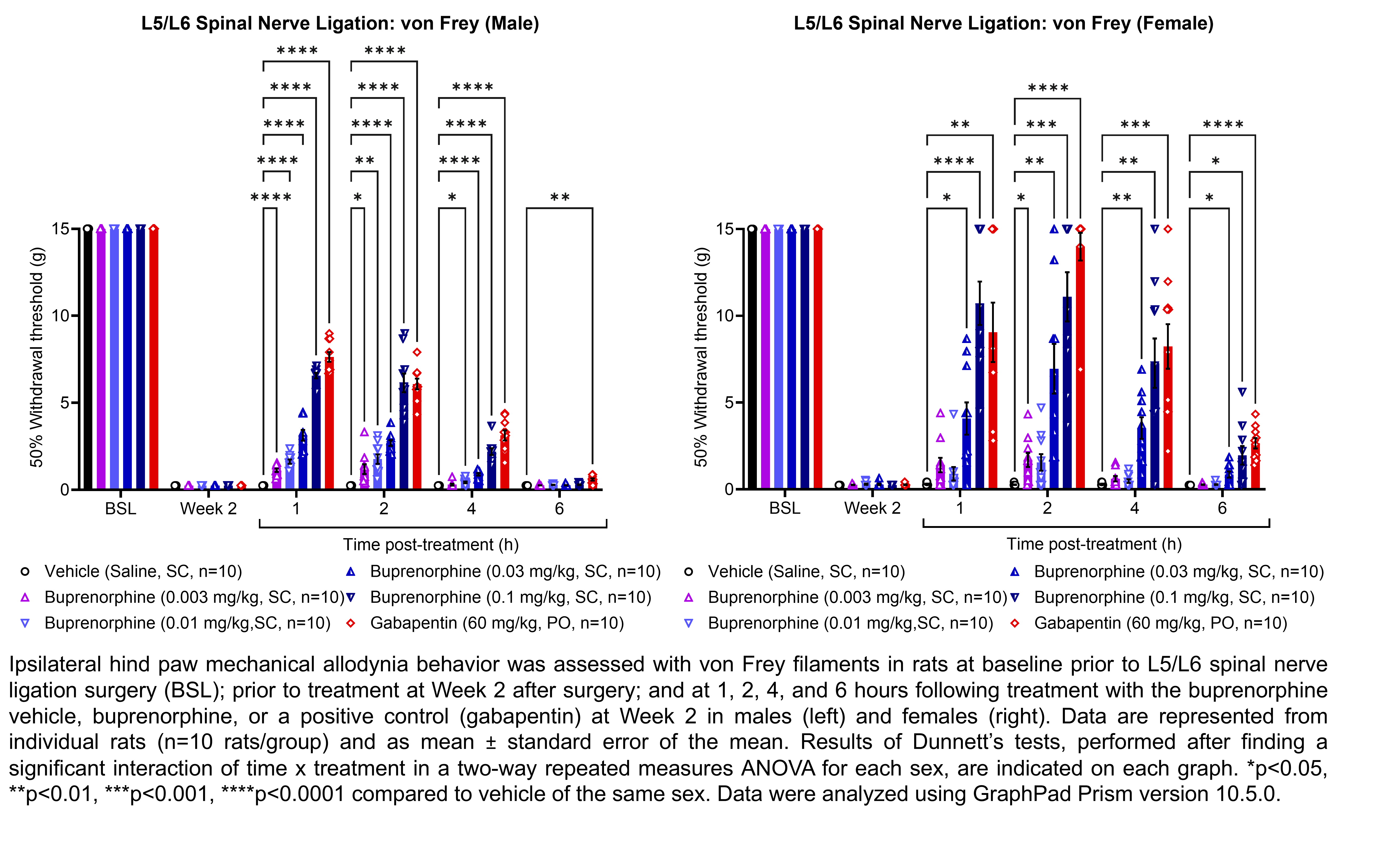
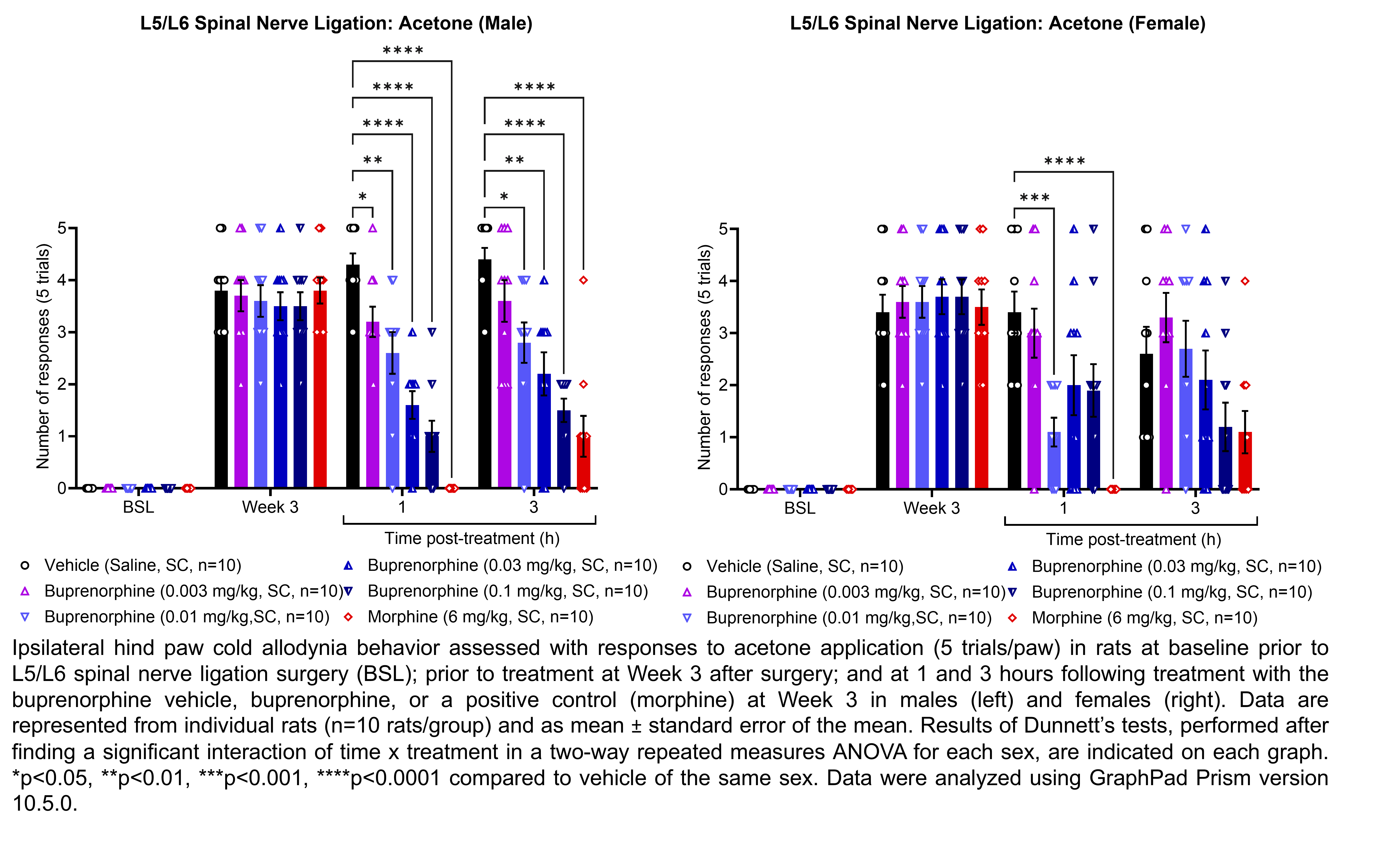
The table below describes the formulation of buprenorphine hydrochloride and the controls morphine sulfate and gabapentin for the following in vivo experiments.
| Experiment(s) | Compound | Dose(s) mg/kg | Correction factor | Dose volume mL/kg | Route | Vehicle | Suspension / Solution |
|---|---|---|---|---|---|---|---|
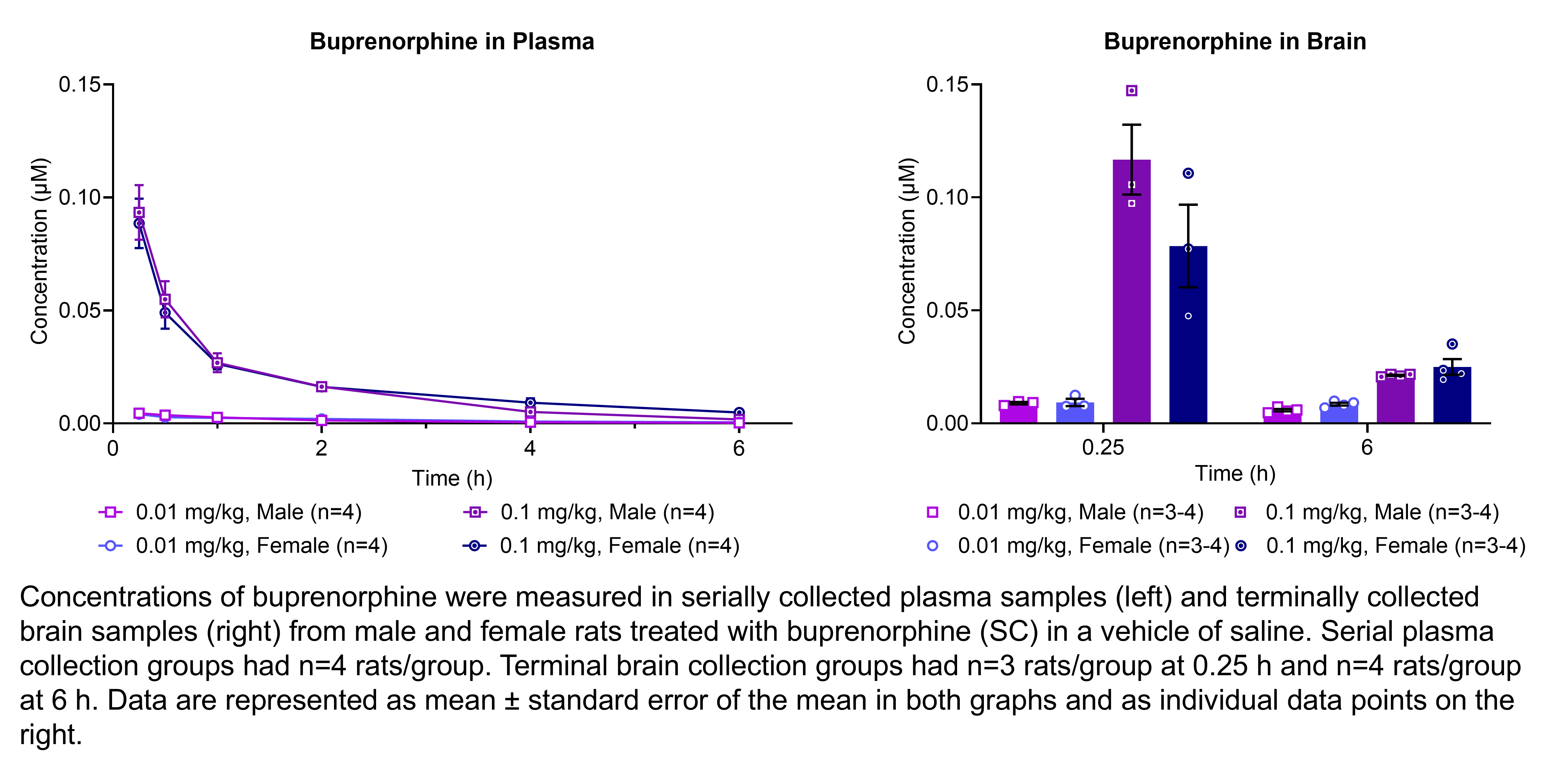
| Pharmacokinetics | Buprenorphine | 0.01, 0.1 | 1.08 | 1 | SC | Saline | Solution |
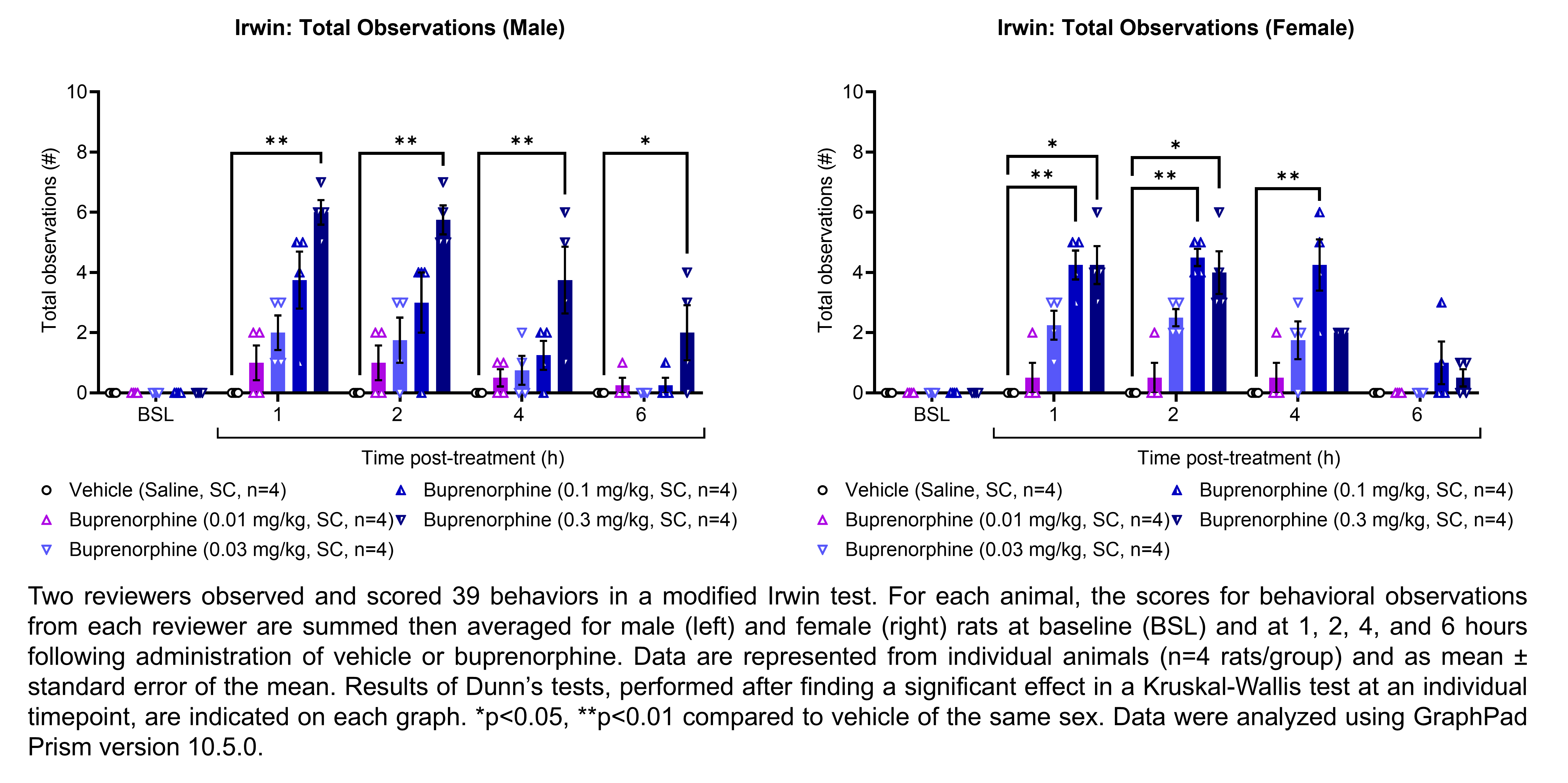
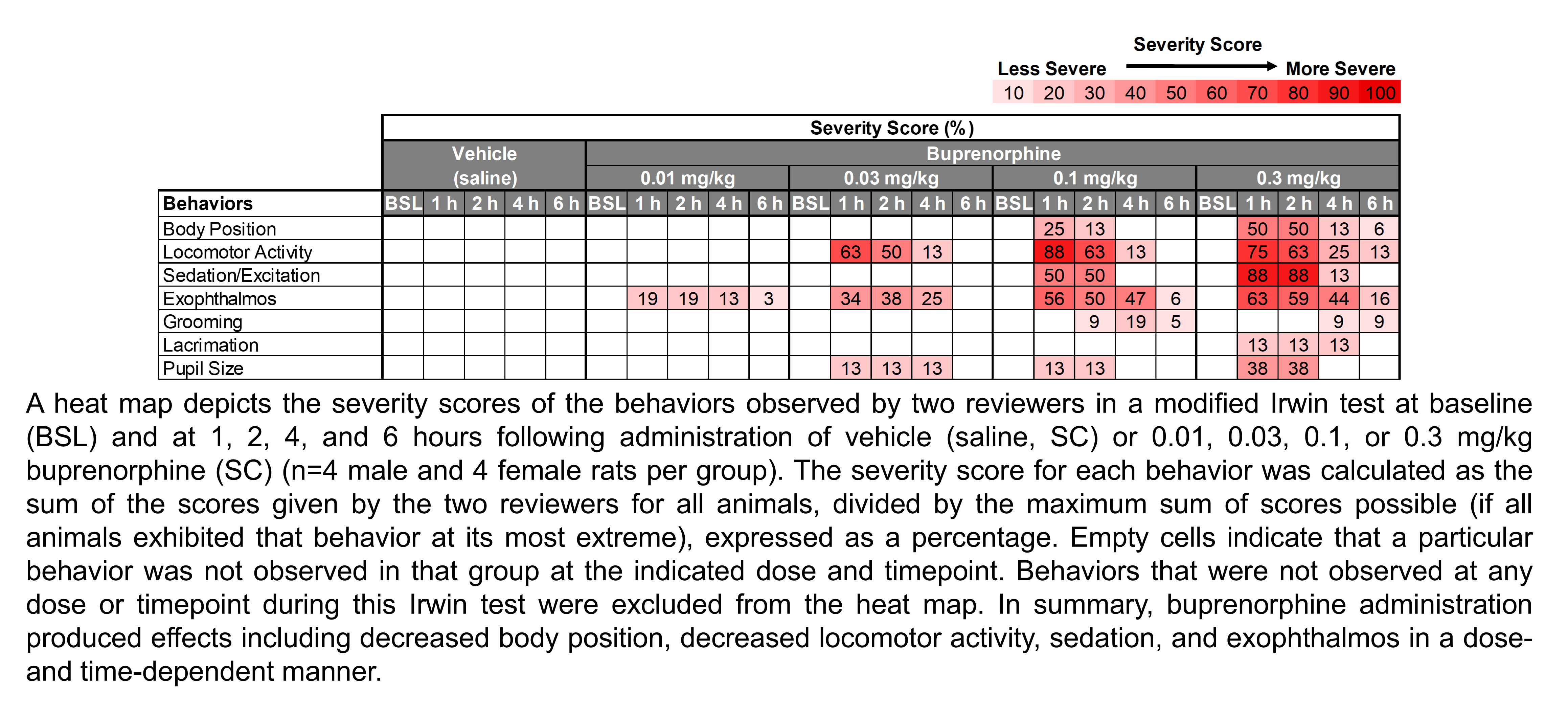
| Irwin, Rotarod | Buprenorphine | 0.01, 0.03, 0.1, 0.3 | 1.08 | 1 | SC | Saline | Solution |
| Plantar incision, | Buprenorphine | 0.003, 0.01, 0.03, 0.1 | 1.08 | 1 | SC | Saline | Solution |
| L5/L6 SNL | |||||||
| Plantar incision | Morphine | 6 | 1.33 | 1 | SC | Saline | Solution |
| L5/L6 SNL | |||||||
| L5/L6 SNL | Gabapentin | 60 | 1.00 | 1 | PO | Saline | Solution |
L5/L6 SNL = L5/L6 spinal nerve ligation; PO = per os; SC = subcutaneous
Results
Expand and Collapse accordion content
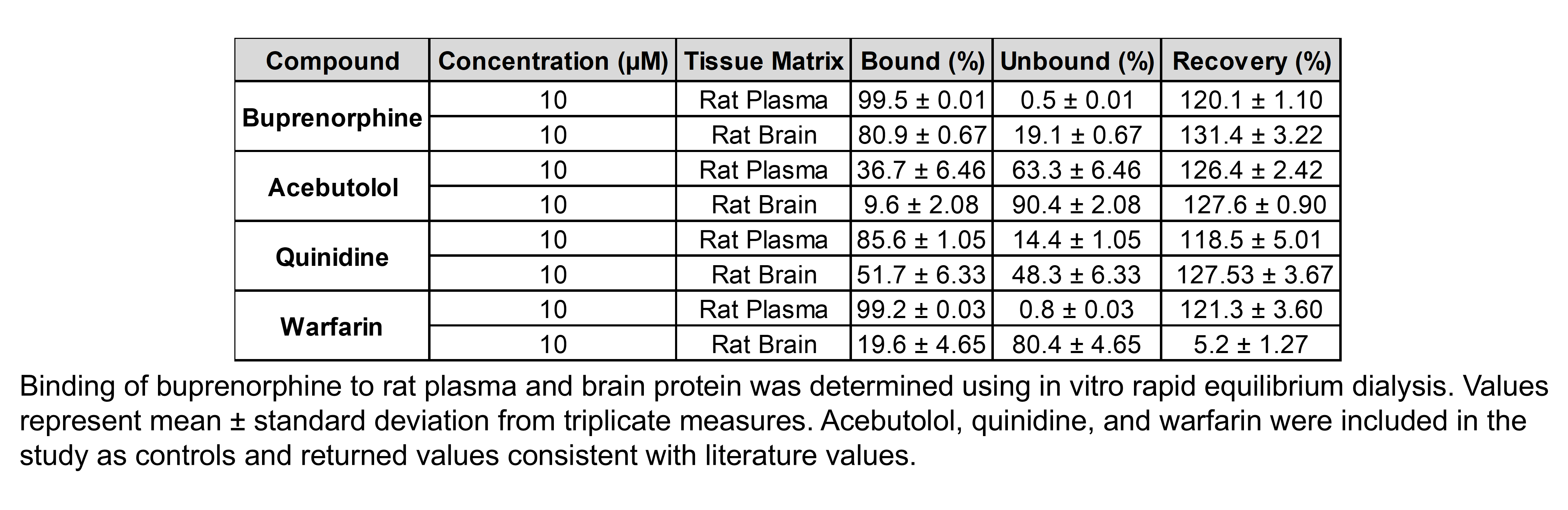




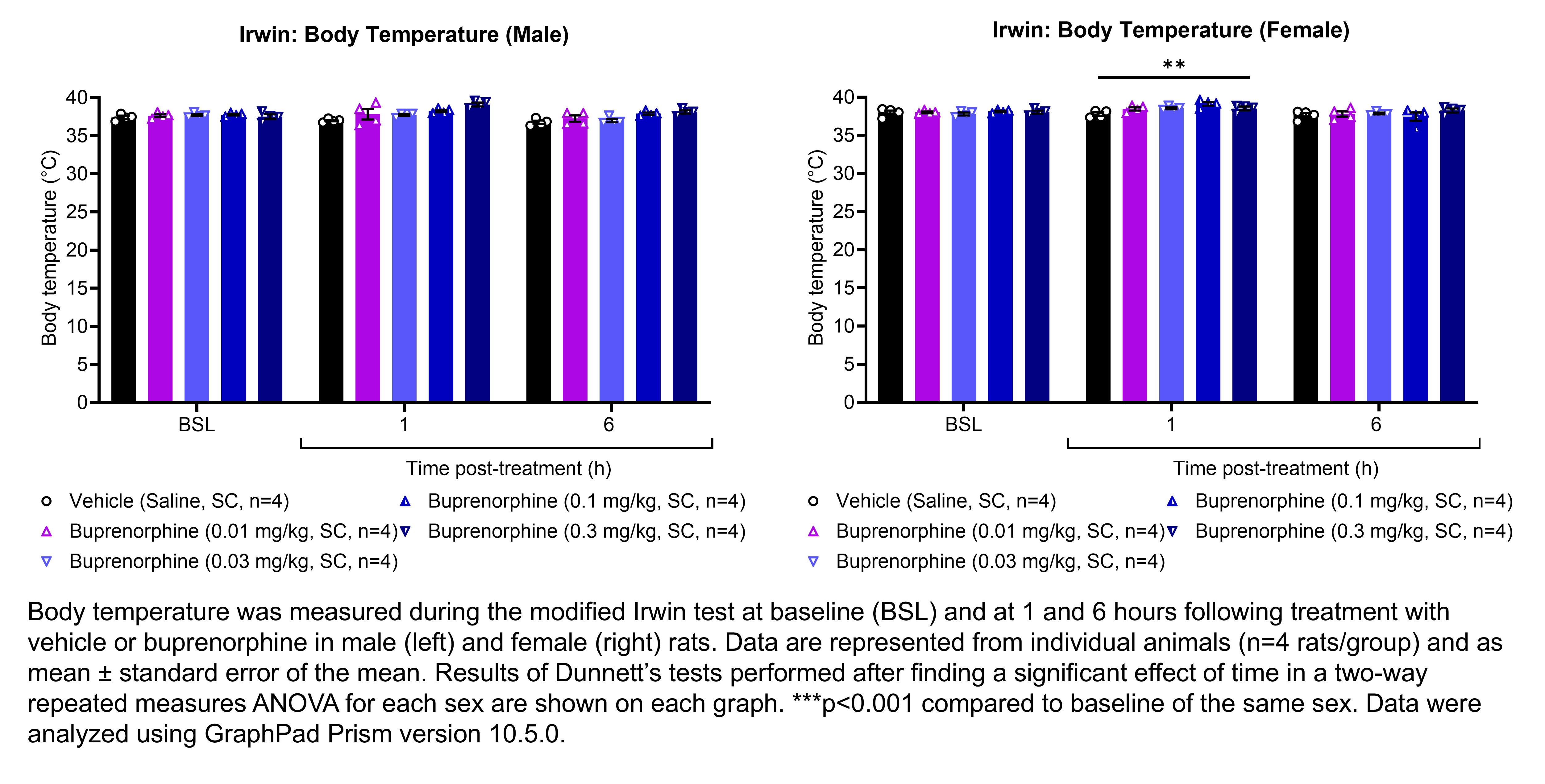

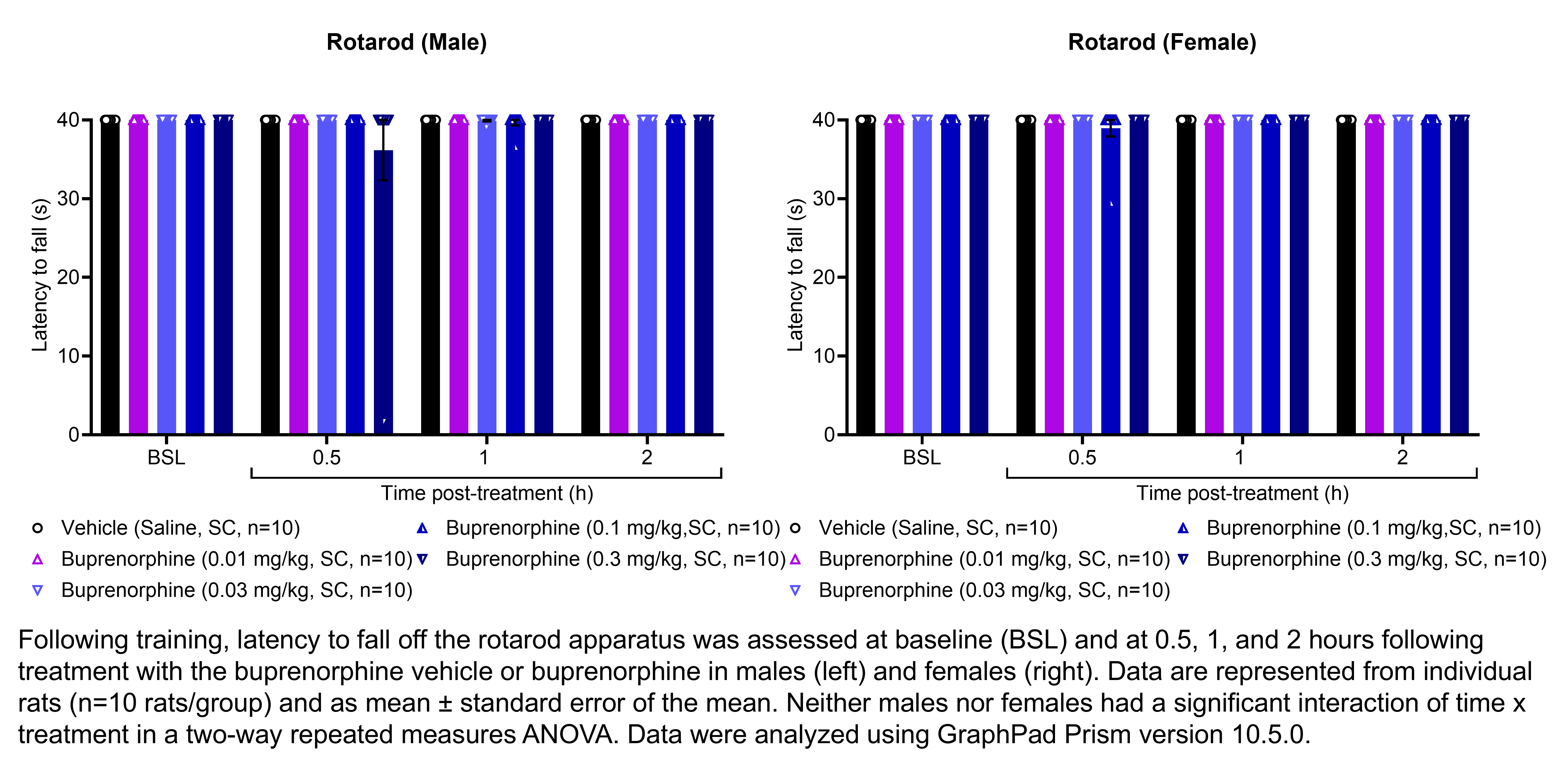
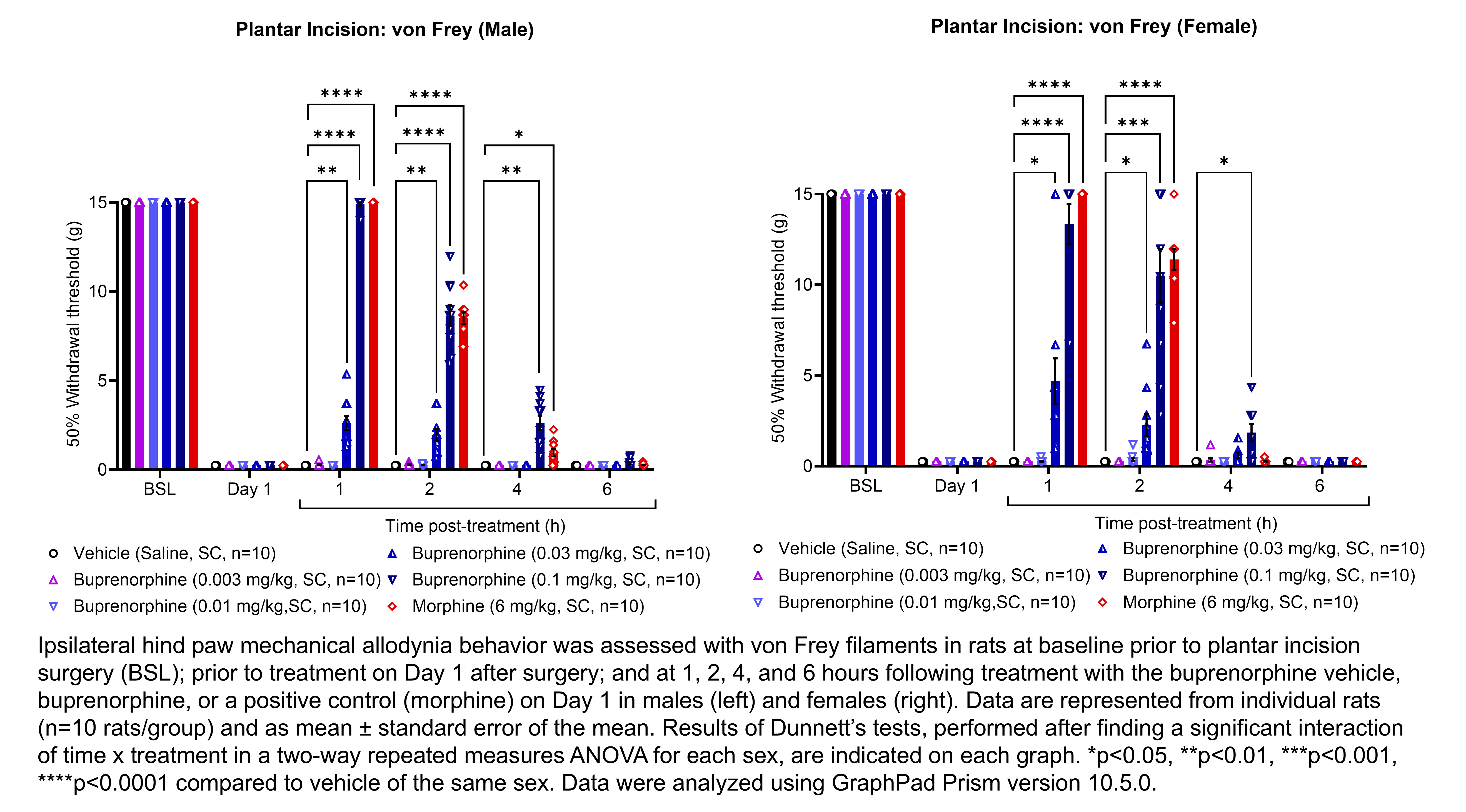
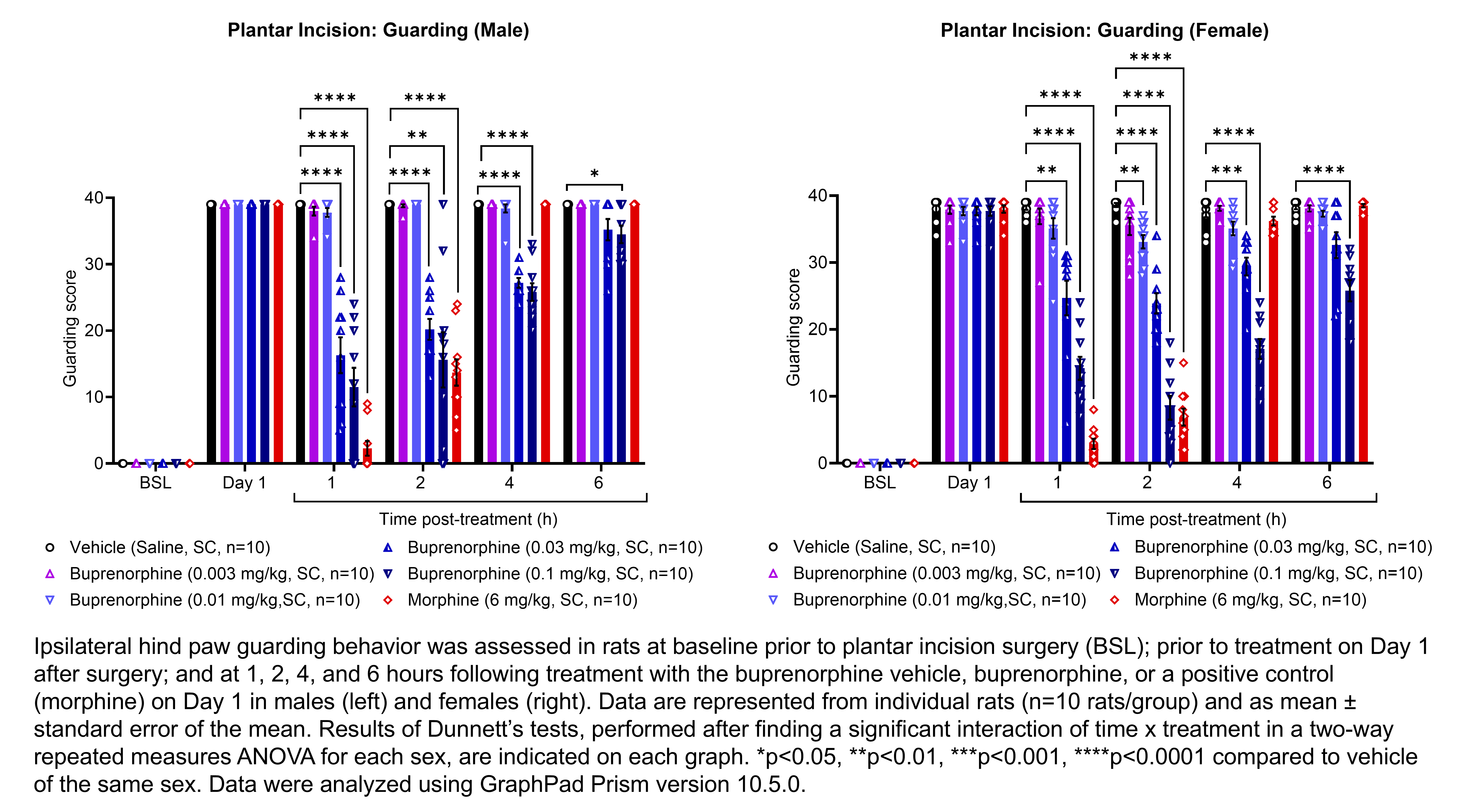
This work was conducted by PsychoGenics Inc. (Paramus, NJ) in collaboration with PSPP, NINDS, NIH under contract # 75N95019D00026 and 75N95024D00038. Prescribing information for clinically used controls can be found at labels.fda.gov. Information for icons representing experimental design details can be found through the NINDS Office of Research Quality https://go.nih.gov/Yw2tHGI.